ok.med

Also known as: High blood pressure · Pre-hypertension ·

The Centre for Health Protection defines hypertension in adults as a systolic pressure persistently at 140 mmHg or above, or a diastolic pressure persistently at 90 mmHg or above. Adults generally should keep systolic below 120 and diastolic below 80 mmHg.

Hong Kong has 335 registered Cardiology doctors.

Source: Medical Council of Hong Kong register · read 2026-09-20

ok.med editorial team ·
Compiled by the editorial team from the sources listed below. Not reviewed by an individual doctor.

What reading counts as high?

The Centre for Health Protection is explicit: a systolic pressure persistently at 140 mmHg or above, or a diastolic pressure persistently at 90 mmHg or above, is hypertension.

The word doing the work is “persistently”. One high reading is not a diagnosis: blood pressure varies with activity, mood and time of day, so the judgement rests on repeated measurements interpreted by a doctor.

Blood pressure levels as classified by the Centre for Health Protection (adults)
CategoryLevelWhat it means
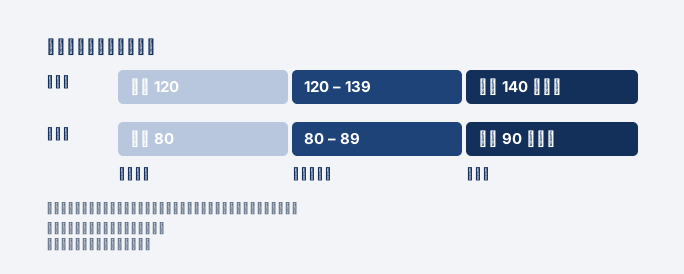
General targetSystolic below 120, diastolic below 80The level the Centre advises adults to maintain
Pre-hypertensionSystolic 120 to 139, or diastolic 80 to 89Not yet hypertension, but above the advised target
HypertensionSystolic persistently 140 or above, or diastolic 90 or aboveDiagnosed by a doctor on repeated measurements

Why is it called a silent killer?

Because raised blood pressure usually produces no sensation at all. Like diabetes, hypertension is generally found when it is measured rather than because someone feels unwell.

This is exactly why the Government screens residents aged 45 or above who are not known to have either condition: a disease with no symptoms cannot be found by waiting for symptoms, only by measuring. A home monitor, a check-up, or screening under the co-care programme are different routes to the same act.
Medical Council of Hong Kong register

335 Cardiology doctors in Hong Kong

All 335 ›

The doctors below are listed from the Medical Council of Hong Kong register. This is not a recommendation, and says nothing about outcomes for this condition. Ask the doctor directly.

These are Medical Council registration details, ordered by registration number. ok.med does not rate or recommend doctors, and holds no outcome or satisfaction data.

On ranking, we tell you the truth — today the order follows the Medical Council register. No scores, no sponsored places.

Our algorithm cares about one thing: whether this doctor is most useful to the patient. We publish the rules because trust should never rest on vagueness.

No doctor can pay for a higher ranking.

How does the government scheme work?

The Chronic Disease Co-Care Programme covers hypertension and diabetes together, for Hong Kong residents aged 45 or above not already known to have either. Participants register as a member of a District Health Centre or Station, which helps match them with a family doctor.

At screening the consultation co-payment is $120 against a $196 subsidy, with laboratory costs met in full. After diagnosis, treatment consultations carry a $150 co-payment against a $166 subsidy; medicines on the list carry no charge, and the programme covers more than forty essential medicines including those for blood pressure.

Someone with hypertension receives up to six subsidised consultations a year, the same as for diabetes. Participants aged 65 or above may pay every co-payment with health care vouchers.

Co-Care Programme: what someone with hypertension actually pays
ItemParticipant paysGovernment subsidy
Screening consultation$120$196, laboratory costs met in full
Treatment consultation, up to six a year$150$166
Listed blood pressure medicinesNo chargeAmong more than forty essential medicines covered
Aged 65 or aboveAll co-payments payable with health care vouchersOut-of-pocket cost can be nil

Why take medicine when nothing feels wrong?

Because the aim of treatment is not to remove a sensation but to lower long-term risk. Hypertension produces no symptoms, yet sustained high pressure damages blood vessels and organs — which is why it needs long-term follow-up.

That the programme funds up to six consultations a year rather than a single test reflects this: managing blood pressure is a continuing process of review, adjustment and re-measurement. This page recommends no medicine or dose; that is for the treating doctor.

At a glance

Blood pressure levels as classified by t

Blood pressure levels as classified by the Centre for Health Protection: target below 120 systolic and below 80 diastolic; pre-hypertension 120 to 139 systolic or 80 to 89 diastolic; hypertension persistently 140 or above systolic, or 90 or above diastolic.
Source: Centre for Health Protection · Read the original ›

Are home readings reliable?

Home measurement has real value, because the definition of hypertension rests on pressure being persistently raised, and a single clinic reading cannot establish that. But home readings are not a basis for self-diagnosis or for adjusting medication.

What the Centre provides is a clear set of numbers — 140 and 90, with 120 to 139 and 80 to 89 as pre-hypertension — so a reader can see where their own readings fall. Interpreting a set of readings, and deciding whether treatment is needed, is a clinical judgement.

Is diabetes part of the same scheme?

Yes, and on identical terms: the same age threshold, the same exclusion, the same co-payments, and the same entitlement of up to six subsidised consultations a year.

Someone at the screening stage does not know, before the results, whether they have hypertension, raised blood glucose, diabetes, or more than one; where several apply, the highest entitlement governs. The diabetes guide covers that disease’s own symptoms, risk factors and complications.

What are the thresholds and subsidies here?

Two sets of numbers decide everything: the Centre for Health Protection’s blood pressure thresholds, and the co-payments under the Government’s co-care programme. Both are published, and no overseas source can supply the second.

  • The Centre for Health Protection defines adult hypertension as a systolic pressure persistently at 140 mmHg or above, or a diastolic pressure persistently at 90 mmHg or above.Centre for Health Protection: hypertension, the silent killer · read · (source)
  • Adults generally should keep systolic below 120 and diastolic below 80 mmHg. A systolic of 120 to 139, or a diastolic of 80 to 89, is regarded as pre-hypertension.Centre for Health Protection: hypertension, the silent killer · read · (source)
  • The Chronic Disease Co-Care Pilot Scheme is for Hong Kong residents aged 45 or above, excluding those already known to have diabetes or hypertension; someone with hypertension receives up to six subsidised consultations a year.Health Bureau announces details of the scheme (25 September 2023) · read · (source)
  • At the treatment stage the consultation co-payment is $150 against a $166 subsidy; listed medicines carry no charge, with more than forty essential medicines covered including those for blood pressure. Those aged 65 or above may pay all co-payments with health care vouchers.Primary Healthcare: Chronic Disease Co-Care Programme · read · (source)

When is urgent care needed?

  • A reading far above 140/90 together with severe headache, chest pain, breathlessness or visual change.
  • Sudden weakness of the face or a limb, slurred speech or one-sided numbness — stroke symptoms need immediate attention.
  • Persistent chest pain or tightness, especially with sweating or nausea.
  • A rise in blood pressure during pregnancy, or swelling with headache and blurred vision.
  • Where pressure stays uncontrolled on treatment, do not change the dose independently — the prescribing doctor should assess it.

Frequently asked questions

Is 130/85 high?
On the Centre for Health Protection’s classification, a systolic of 120 to 139 or a diastolic of 80 to 89 is pre-hypertension — not yet hypertension, but above the advised target. Whether anything is needed is for a doctor to judge on repeated readings.
Does one high reading mean hypertension?
No. The Centre’s definition turns on the pressure being persistently raised. Blood pressure varies with activity, mood and time of day, and the diagnosis rests on repeated measurements interpreted by a doctor.
What does the government scheme cost?
At screening, $120 for the consultation with laboratory costs met in full. In treatment, $150 a consultation with listed medicines free, and up to six subsidised consultations a year for hypertension. Those aged 65 or above can pay every co-payment with health care vouchers.
Is medication needed with no symptoms?
Hypertension usually produces no symptoms, and treatment aims to lower long-term risk rather than relieve a sensation. Whether medication is needed, and which, is a clinical judgement this page does not make.
Is measuring at home useful?
It has real value, because the definition rests on pressure being persistently raised and a single clinic reading cannot show that. Home readings should not be used to self-diagnose or adjust medication, though — they are for a doctor to interpret.
Are hypertension and diabetes screened together?
Yes. One co-care programme covers both on the same terms, and where more than one condition applies the highest entitlement governs.

Sources

  1. Centre for Health Protection: hypertension, the silent killer — the thresholds for hypertension and pre-hypertension. Centre for Health Protection, Department of Health ()
  2. Health Bureau: details of the Chronic Disease Co-Care Pilot Scheme — eligibility, co-payments, subsidies and annual entitlement. HKSAR Government Press Release (25 September 2023) ()
  3. Primary Healthcare: the Chronic Disease Co-Care Programme — the two stages, entitlements, and the role of District Health Centres. Primary Healthcare Commission ()
  4. Government press release: the scheme extended to lipid testing, with strengthened allied health services at District Health Centres. HKSAR Government Press Release (20 March 2025) ()

This page is compiled from the Hong Kong official sources listed above. It is general information only — not a diagnosis, a treatment recommendation or medical advice, and no substitute for seeing a doctor. If you are unsure or your condition changes, consult a registered doctor.