Who is eligible?
The programme subsidises Hong Kong residents aged 50 to 75 who have no symptoms of colorectal cancer. Eligibility is expressed by year of birth and the Department of Health restates it each year — its December 2025 announcement, for instance, addressed those born between 1950 and 1976.
Being symptom-free is a condition of entry, not a footnote. Screening is for people who feel well; anyone with symptoms should see a doctor directly rather than wait for a screening appointment, because the pathway runs to a fixed timetable and symptoms call for diagnosis rather than screening.
Because the birth-year cohort shifts annually, check the Department’s current announcement. The age band recorded here is the programme’s durable rule; the birth years are what change.
What does the stool test involve?
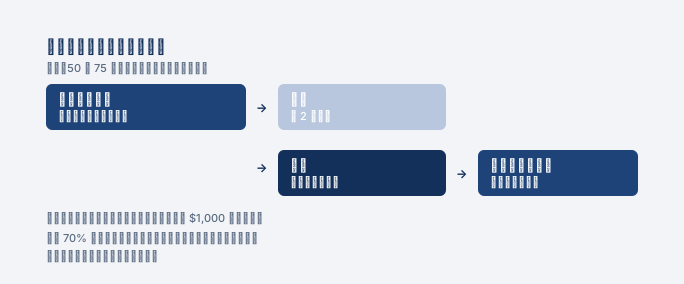
Those wishing to join first see a participating primary care doctor, who arranges a faecal immunochemical test — which the Department of Health describes as an improved form of the faecal occult blood test.
The test looks for blood not visible to the eye. A negative result carries a recommendation to repeat the test in two years; a positive result leads to referral to a colonoscopy doctor for a government-subsidised colonoscopy.
A positive result does not mean cancer. The colonoscopy exists to find the cause of the bleeding, which may be a polyp — and removing a polyp during colonoscopy is itself a way of preventing colorectal cancer.
| Step | What happens | What follows |
|---|---|---|
| Step one: faecal immunochemical test | See a participating primary care doctor, who arranges the test | Negative: repeat in two years |
| Step two: colonoscopy | A positive test leads to referral for a government-subsidised colonoscopy | Establishes the cause, and polyps can be removed at the same time |