ok.med

Also known as: MMR vaccine · Rubeola ·

The Centre for Health Protection states that a measles patient is infectious from four days before the rash appears until four days after. It begins with fever, cough, runny nose, red eyes and white spots inside the mouth, and three to seven days later a blotchy rash spreads from the face over the body. Vaccination is the most effective prevention.

Hong Kong has 652 registered Paediatrics doctors.

Source: Medical Council of Hong Kong register · read 2026-09-20

ok.med editorial team ·
Compiled by the editorial team from the sources listed below. Not reviewed by an individual doctor.

What are the symptoms of measles?

The Centre for Health Protection describes two stages: fever, cough, runny nose, red eyes and white spots inside the mouth first; then, three to seven days later, a blotchy rash.

The rash usually spreads from the face over the whole body and lasts four to seven days, though it can persist for up to three weeks. The first stage resembles an ordinary upper respiratory infection, which is why measles is hard to recognise before the rash — and why the infectious period has already begun by then.

When is it infectious?

The Centre for Health Protection states that a patient can infect others from four days before the rash appears until four days after it.

The measles timeline
StageWhat happensWhat it means
Four days before the rashFever, cough, runny nose, red eyes, white spots in the mouthAlready infectious, but it looks like an ordinary cold
The rashA blotchy rash spreading from the face over the bodyOnly now is it readily recognisable as measles
Four days after the rashThe infectious period endsThe rash itself lasts 4 to 7 days, sometimes up to 3 weeks

Medical Council of Hong Kong register

652 Paediatrics doctors in Hong Kong

All 652 ›

The doctors below are listed from the Medical Council of Hong Kong register. This is not a recommendation, and says nothing about outcomes for this condition. Ask the doctor directly.

These are Medical Council registration details, ordered by registration number. ok.med does not rate or recommend doctors, and holds no outcome or satisfaction data.

On ranking, we tell you the truth — today the order follows the Medical Council register. No scores, no sponsored places.

Our algorithm cares about one thing: whether this doctor is most useful to the patient. We publish the rules because trust should never rest on vagueness.

No doctor can pay for a higher ranking.

What complications can measles cause?

The Centre for Health Protection states that in severe cases the respiratory system, the digestive tract and the brain can be affected, leading to serious consequences and even death.

The Centre therefore advises seeing a doctor as soon as measles symptoms appear. There is no specific medicine for measles; care is supportive and directed at complications, which is why prevention through vaccination is described as the most effective approach.

How are children vaccinated in Hong Kong?

The Centre for Health Protection states that under the Hong Kong Childhood Immunisation Programme children receive two measles-containing doses in total. Vaccination is the most effective prevention.

The exact arrangement depends on date of birth. A child born on or after 1 July 2018 receives one dose of measles, mumps and rubella (MMR) vaccine at a Maternal and Child Health Centre at the age of one, and one dose of measles, mumps, rubella and varicella (MMRV) vaccine at 18 months.

The second dose is therefore the same injection for measles and for chickenpox. The two-dose schedule a parent reads about in the chickenpox guide and the two doses described here are different components of one immunisation timetable.

At a glance

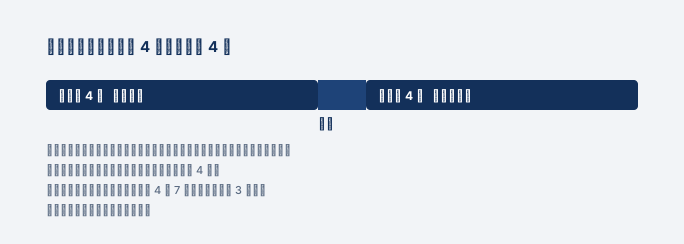
The measles infectious period: from four

The measles infectious period: from four days before the rash to four days after. Before the rash the symptoms resemble an ordinary cold, so the infectious period begins before it is recognised.
Source: Centre for Health Protection · Read the original ›

Do foreign domestic helpers need the vaccine?

The Centre for Health Protection states that all foreign domestic helpers without immunity to measles should receive the measles, mumps and rubella (MMR) vaccine.

The Centre issues material on this in several languages, including a letter addressed to foreign domestic helpers and a letter with a factsheet to employment agencies. The advice is locally specific because a considerable number of households employ a helper caring for young children, and young children are not fully protected until both doses are complete.

What about before travelling?

The Centre for Health Protection notes that the body takes about two weeks after vaccination to develop antibodies against measles, so travellers should plan and be vaccinated early.

A two-week gap means a jab a day or two before departure provides no protection. The same applies to the influenza vaccine, where the Centre likewise puts antibody development at about two weeks. Timing is itself part of whether a vaccine works.

What are the arrangements in Hong Kong?

Measles prevention in Hong Kong rests on a two-dose schedule under the Childhood Immunisation Programme, with separate, specific advice for foreign domestic helpers and for travellers. All three are local arrangements.

  • The Centre for Health Protection states that under the Hong Kong Childhood Immunisation Programme children receive two measles-containing doses, and that vaccination is the most effective prevention.Centre for Health Protection: measles FAQ · read · (source)
  • The Centre states that a patient can infect others from four days before the rash appears until four days after.Centre for Health Protection: measles FAQ · read · (source)
  • The Centre states that all foreign domestic helpers without immunity to measles should receive the MMR vaccine.Centre for Health Protection: measles — letter to foreign domestic helpers · read · (source)
  • A child born on or after 1 July 2018 receives one dose of MMR at the age of one and one dose of measles, mumps, rubella and varicella (MMRV) vaccine at 18 months.Centre for Health Protection: MMRV / MMR vaccination information · read · (source)

When should care be sought quickly?

  • Any measles symptoms — the Centre’s advice is to see a doctor as soon as possible.
  • Fast or laboured breathing, or a persistent severe cough — the respiratory system is affected in severe cases.
  • Drowsiness, confusion, fits or a marked change in behaviour — the brain is affected in severe cases.
  • Persistent vomiting or diarrhoea preventing fluids, with signs of dehydration.
  • Exposure to a case in a young child who has not completed both doses, a pregnant woman, or someone with weakened immunity.

Each has its own page and doctor list

Frequently asked questions

How many measles doses are needed?
Two. The Centre states that children receive two measles-containing doses under the Hong Kong Childhood Immunisation Programme, with the exact arrangement depending on date of birth.
Is it infectious before the rash?
Yes. The Centre states a patient is infectious from four days before the rash, when the symptoms still resemble an ordinary upper respiratory infection and are therefore hard to recognise.
Does a domestic helper need vaccinating?
The Centre states that all foreign domestic helpers without immunity to measles should receive MMR, and publishes material on this in several languages for helpers and for employment agencies.
Is there time to vaccinate before a trip?
Plan ahead. The Centre notes the body takes about two weeks to develop antibodies, so a jab a day or two before departure offers no protection.
Is there a medicine for measles?
There is no specific medicine; care is supportive and directed at complications. The Centre advises seeing a doctor promptly if symptoms appear, and describes vaccination as the most effective prevention.
Is the measles jab the same as the chickenpox one?
The second dose is. A child born on or after 1 July 2018 receives MMRV — measles, mumps, rubella and varicella — at 18 months, one injection covering four diseases.

Sources

  1. Centre for Health Protection: measles FAQ — symptoms, infectious period, complications and vaccination advice. Centre for Health Protection, Department of Health ()
  2. Centre for Health Protection: MMRV and MMR vaccination information — the schedule by date of birth. Centre for Health Protection, Department of Health ()
  3. Centre for Health Protection: measles — letter to foreign domestic helpers. Centre for Health Protection, Department of Health ()
  4. Centre for Health Protection: measles resources — leaflets, posters and education material. Centre for Health Protection, Department of Health ()

This page is compiled from the Hong Kong official sources listed above. It is general information only — not a diagnosis, a treatment recommendation or medical advice, and no substitute for seeing a doctor. If you are unsure or your condition changes, consult a registered doctor.