ok.med

Also known as: Cervical screening · Pap smear ·

Cervical cancer is overwhelmingly caused by persistent infection with human papillomavirus, and regular screening can find abnormal changes in the cervix before they become cancer. The Department of Health’s Cervical Screening Programme recommends different methods and intervals by age; since April 2023 HPV testing has been the primary screen for women aged 30 to 64.

Hong Kong has 502 registered Obstetrics & Gynaecology doctors.

Source: Medical Council of Hong Kong register · read 2026-09-20

ok.med editorial team ·
Compiled by the editorial team from the sources listed below. Not reviewed by an individual doctor.

How is cervical cancer related to HPV?

The link is direct. The Centre for Health Protection states that about 90 per cent of cervical cancers in Hong Kong are caused by HPV types 16, 18, 31, 33, 45, 52 and 58, and that the nine-valent vaccine covers those seven genotypes.

HPV is a group of more than 150 virus types, about forty of which infect the genital organs. Infection itself is common and usually clears on its own; it is persistent infection with certain types that leads to pre-cancerous change and cancer. That is precisely why screening exists — the aim is not to find cancer but to find abnormality before cancer forms.

At what age should screening start?

The Department of Health’s Cervical Screening Programme recommends by age and sexual history rather than a single rule: women aged 25 to 29 and those aged 30 to 64 who have ever had sex follow different arrangements, and those aged 21 to 24 depend on risk factors.

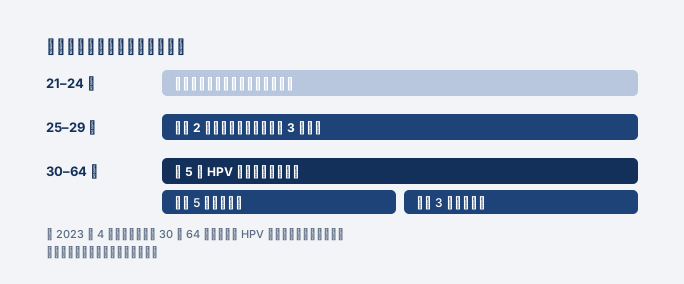
Cervical Screening Programme: what is recommended, by age
AgeRecommendationCondition
21 to 24Screening as assessed and advised by a doctorHas had sex and carries risk factors for HPV infection or cervical cancer
25 to 29After two consecutive normal annual cytology results, every three yearsHas ever had sex
30 to 64HPV testing every five years; or co-testing every five years; or, after two normal annual cytology results, cytology every three yearsHas ever had sex

Medical Council of Hong Kong register

502 Obstetrics & Gynaecology doctors in Hong Kong

All 502 ›

The doctors below are listed from the Medical Council of Hong Kong register. This is not a recommendation, and says nothing about outcomes for this condition. Ask the doctor directly.

These are Medical Council registration details, ordered by registration number. ok.med does not rate or recommend doctors, and holds no outcome or satisfaction data.

On ranking, we tell you the truth — today the order follows the Medical Council register. No scores, no sponsored places.

Our algorithm cares about one thing: whether this doctor is most useful to the patient. We publish the rules because trust should never rest on vagueness.

No doctor can pay for a higher ranking.

Why is HPV testing used now rather than a smear?

This is the most significant recent change: since April 2023 the Department of Health has used HPV testing as the primary cervical cancer screening method for women aged 30 to 64.

The two tests answer different questions. Cytology looks at whether cells have already changed; an HPV test looks at whether a cancer-causing virus type is present at all — that is, whether the risk exists. That is why a normal HPV result carries a longer recommended interval: five years rather than three.

The practical implication for a reader is that material written before 2023, or written from overseas guidance, may describe an arrangement Hong Kong no longer follows. When looking up screening advice, the date and the source matter as much as the content.

Is screening still needed after the HPV vaccine?

Vaccination and screening do different jobs: the vaccine prevents infection, screening finds change that has already occurred. The Centre for Health Protection notes the nine-valent vaccine covers the seven HPV types behind about 90 per cent of cervical cancers here — high coverage, but not all of it.

The vaccine also does nothing to clear an infection already present before it was given. The Programme’s recommendations are therefore set by age and sexual history rather than by vaccination status. Individual circumstances are for a doctor to assess.

At a glance

Cervical Screening Programme intervals:

Cervical Screening Programme intervals: ages 25 to 29, every three years after two normal annual results; ages 30 to 64, HPV testing every five years, co-testing every five years, or cytology every three years.
Source: Cervical Screening Programme, Department of Health · Read the original ›

Where can screening be done?

The Cervical Screening Programme maintains a list of service providers covering Department of Health clinics, non-governmental organisations and private doctors, so women can choose by district and by cost.

The Department of Health’s Family Health Service also provides cervical screening. Fees and booking arrangements vary between providers, so it is worth checking first. Where follow-up by an obstetrics and gynaecology specialist is wanted, the registered specialists in Hong Kong are listed further down this page to check and compare.

How does Hong Kong’s programme differ?

Hong Kong runs a Cervical Screening Programme under the Department of Health, with recommendations set by age and sexual history, and has moved to HPV testing as the primary screen for women aged 30 to 64. These are local arrangements with a date and a source.

  • Since April 2023 the Department of Health has used HPV testing as the primary cervical cancer screening method for women aged 30 to 64.Cervical Screening Programme: who should be screened and how · read · (source)
  • Women aged 25 to 29 who have ever had sex may be screened every three years once two consecutive annual cytology results have been normal.Cervical Screening Programme: who should be screened and how · read · (source)
  • Women aged 30 to 64 who have ever had sex may have HPV testing every five years, co-testing with cytology every five years, or — after two normal annual cytology results — screening every three years.Cervical Screening Programme: who should be screened and how · read · (source)
  • The Centre for Health Protection states that about 90 per cent of cervical cancers in Hong Kong are caused by HPV types 16, 18, 31, 33, 45, 52 and 58, all seven of which the nine-valent vaccine covers.Centre for Health Protection: Human Papillomavirus Vaccination · read · (source)

What should not wait for a scheduled screen?

  • Vaginal bleeding between periods, or bleeding after sex.
  • Any vaginal bleeding after the menopause.
  • Persistent or foul-smelling vaginal discharge, particularly if bloodstained.
  • Persistent pelvic or lower abdominal pain, or pain during sex.
  • Where a screening result is abnormal, complete the follow-up a doctor arranges rather than waiting for the next routine screen.

Each has its own page and doctor list

Frequently asked questions

How often should I be screened?
On the Department of Health’s recommendations: women aged 25 to 29, every three years after two consecutive normal annual cytology results; women aged 30 to 64, HPV testing every five years, co-testing every five years, or cytology every three years after two normal annual results.
Is screening needed without sexual experience?
The Department of Health’s recommendations are framed for women who have ever had sex. Individual circumstances are for a doctor to assess; this page cannot replace that judgement.
What is the difference between HPV testing and a smear?
Cytology looks at whether cells have already changed; an HPV test looks at whether a cancer-causing virus type is present — whether the risk exists. A normal HPV result therefore carries a longer interval: five years rather than three.
Do I still need screening if vaccinated?
The recommendations are set by age and sexual history, not by vaccination status. The nine-valent vaccine covers the seven types behind about 90 per cent of cervical cancers here — high but not all — and does not clear an infection present before it was given.
Does an abnormal result mean cancer?
No. The purpose of screening is to find abnormal change before it becomes cancer. An abnormal result means further assessment or follow-up is needed, which should be completed as the doctor arranges rather than left to the next routine screen.
Where can it be done?
The Cervical Screening Programme lists service providers including Department of Health clinics, non-governmental organisations and private doctors; the Family Health Service also provides screening. Fees and booking differ by provider, so check first.

Sources

  1. Cervical Screening Programme, Department of Health: who should be screened — method and interval by age, and the date HPV testing became primary. Cervical Screening Programme, Department of Health ()
  2. Cervical Screening Programme: cervical screening — what the tests involve. Cervical Screening Programme, Department of Health ()
  3. Family Health Service, Department of Health: cervical screening FAQ — how often to be screened. Family Health Service, Department of Health ()
  4. Centre for Health Protection: HPV vaccination — the HPV types behind cervical cancer in Hong Kong and what the nine-valent vaccine covers. Centre for Health Protection, Department of Health ()

This page is compiled from the Hong Kong official sources listed above. It is general information only — not a diagnosis, a treatment recommendation or medical advice, and no substitute for seeing a doctor. If you are unsure or your condition changes, consult a registered doctor.